Yes, coffee can carry mold, and some of that mold can leave behind a toxin called ochratoxin A. That part of the claim is true. The rest of the story is usually missing: the mold grows on wet green coffee, not in your cup; the amount that survives sorting, roasting and brewing is tiny; roasted coffee sold in Norway and the EU has a legal limit of 3 micrograms per kilo; and specialty-grade coffee is graded with zero tolerance for fungus-damaged beans before it is ever roasted. Here is what the evidence says, and what it means for the coffee you buy.
Where the "Moldy Coffee" Story Comes From
Most of the worry traces back to one number: "91.7 percent of coffee is contaminated with mold." It comes from a 2003 Brazilian study of unroasted green arabica, and it is almost always quoted without the second half. In that same study only about a third of the samples contained any ochratoxin A at all, and most of those were at low levels well under the European limit (ConsumerLab). Finding mold spores on raw agricultural produce is normal. Finding toxin in the finished drink is a different question, and that is the one that matters.
The claim became famous when it was used to sell "mold-free" coffee at a premium. Be sceptical of any brand that says its coffee is mold-free without publishing test results. Roasted coffee is not sterile, and no honest roaster will tell you it is. What a good roaster can tell you is where the coffee came from, how it was dried and stored, and that it meets the legal limit with a wide margin.
What Ochratoxin A Is, and Why It Is the One to Watch
Ochratoxin A, usually shortened to OTA, is produced mainly by the fungus Aspergillus ochraceus when coffee is dried too slowly or stored damp (SCA Coffee Standards). It is the mycotoxin regulators focus on in coffee because it is heat-stable and because it can turn up in many dried foods. The European Food Safety Authority reviewed it in 2020 and concluded that it may be genotoxic, which is why the EU lowered the limits for coffee from 1 January 2023 (Regulation (EU) 2022/1370). The current limits are 3 micrograms per kilo for roasted coffee and 5 micrograms per kilo for instant coffee, now set out in Regulation (EU) 2023/915. Norway applies the same limits through the Norwegian regulation on contaminants in food, and the Norwegian Food Safety Authority points importers to exactly these values (Mattilsynet).
Perspective matters here. EFSA's own exposure estimates put the average European adult at roughly 15 to 20 nanograms of OTA per kilo of body weight per week from all food combined (EFSA via Food Safety News). Coffee is one source among many, and cereals, dried fruit and wine are on the same list. Nobody is suggesting you stop eating bread.
Three Things That Remove Most of It Before Your Cup
1. Sorting and grading
Specialty coffee is graded on a 350 gram sample of green beans. To be called specialty grade, that sample must contain zero Category 1 defects, and fungus-damaged beans are a Category 1 defect (Specialty Coffee Association). The same standard requires the green coffee to have a water activity below 0.70. Aspergillus ochraceus needs about 0.76 to grow at all. In plain language: coffee that is dry enough to be specialty grade is too dry for the mold that makes OTA.
2. Roasting
Roasting destroys most of whatever OTA is present. A collaborative study across nine laboratories found reductions between 69 and 96 percent depending on roast conditions, and a 2021 toxicology review puts the typical figure at 70 to 90 percent or more (Heintz et al., Journal of Food Science). Darker and longer roasts remove more. We roast light, so we do not rely on the roaster to clean up a problem. We rely on the coffee not having the problem in the first place.
3. Brewing
Not everything left in the roasted bean ends up in the cup. Studies of brewing report further reductions, and one estimate works out to around 8 nanograms of OTA in a 150 ml cup made from a typical roasted coffee (Journal of Agricultural and Food Chemistry). That is why risk assessments that start from real roasted coffee, rather than from green beans, consistently land on "low risk" for ground coffee.
Where Mold Actually Happens
Mold is a farm and warehouse problem, not a roastery problem. It appears when cherries are picked and left in piles, when parchment is dried on bare ground in humid weather, or when green coffee sits in a damp container for weeks. The FAO published guidelines in 2006 for preventing mold in coffee, and the Codex code of practice that followed is entirely about harvest, drying and storage (FAO). Nothing in it is about roasting, because by the time coffee reaches a roaster the outcome is already decided.
This is the real difference between specialty coffee and the cheapest coffee on the shelf. It is not that specialty coffee is tested harder. It is that the farms producing it dry their coffee properly because their price depends on it, and buyers reject lots that do not meet the standard.
How Our Coffees Are Handled
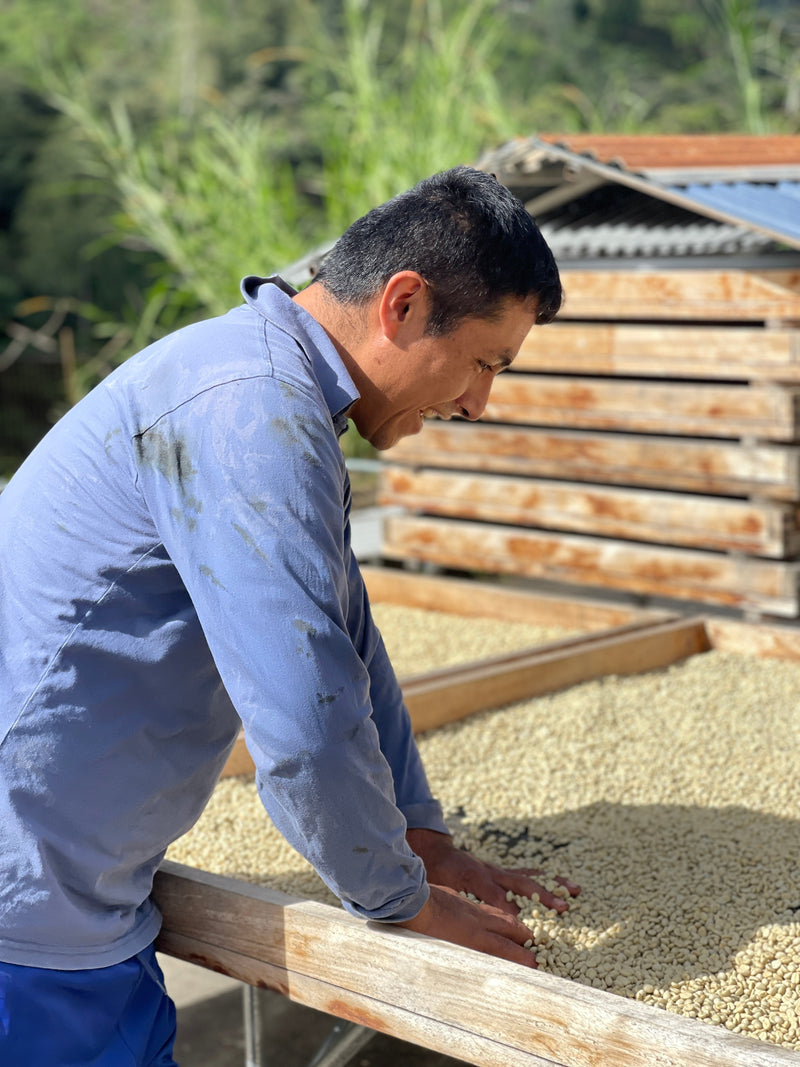
Our current coffees come from Finca Nueva Alianza in Santa Teresa, Cusco, at 1,900 metres. They are washed coffees: the cherries are floated to remove anything damaged, de-pulped the same day, fermented, washed and then dried on raised beds under shade for around 20 days. Raised beds keep the parchment off the ground and let air move around it, which is the single most important step for keeping mold out. The lots are specialty grade, bought directly from the producer, and roasted to order in Oslo in small batches, so the coffee does not sit in a warehouse for months after roasting. Every bag has a roast date on it. You can see the three current lots, with farm, altitude and process listed for each, in our coffee collection.
We do not call our coffee mold-free, because that is not a claim anyone can make about an agricultural product. We can say that it is grown, processed and graded to the standard that keeps ochratoxin out, and that roasted coffee sold here must meet one of the strictest limits in the world.
What You Can Do at Home
Buy whole beans with a roast date and use them within a couple of months. Store them in the sealed bag or an airtight container, at room temperature, away from the stove and the window. Do not keep coffee in the fridge; condensation is exactly the moisture you are trying to avoid. Clean your grinder and your brewer, because old grounds and a damp filter basket are a far more likely source of mold in your kitchen than the beans. If you use capsules, check that they are intact and not swollen. And if you want the lowest possible OTA, skip instant and decaf: both tend to test higher than regular roasted beans, and instant coffee has a higher legal limit for a reason.
The Short Version
Coffee is not mold-free, and no food is. The toxin that matters is ochratoxin A, it is produced on badly dried green coffee, and specialty grading rejects the beans that carry it. Roasting removes most of what is left, brewing removes more, and the legal limit in Norway and the EU is set with a wide safety margin. If you drink good, freshly roasted filter coffee, this is not something you need to worry about. If you want to taste what properly handled coffee is like, Tres Amigos de Cusco gives you all three of our coffees from one farm, and our V60 recipe shows how we brew them. For the difference between washed and natural processing, which is where most of this starts, read Washed vs Natural Gesha.
Frequently Asked Questions
Does coffee have mold in it?
Green, unroasted coffee can carry mold spores like any crop, and badly dried coffee can contain ochratoxin A. Properly dried, graded and roasted coffee contains very little, and roasted coffee sold in Norway and the EU must stay under 3 micrograms of ochratoxin A per kilo.
Is specialty coffee mold-free?
No coffee is sterile, but specialty-grade green coffee must contain zero fungus-damaged beans in a 350 gram sample and have a water activity below 0.70, which is too dry for the mold that produces ochratoxin A to grow.
Does roasting kill mold in coffee?
Roasting destroys the mold itself and breaks down most of the ochratoxin A. Studies report reductions of 69 to 96 percent, with darker and longer roasts removing more.
Is ochratoxin A in coffee dangerous?
At the levels found in roasted coffee, risk assessments conclude the risk is low. The EU lowered its limit to 3 micrograms per kilo in 2023 as a precaution, and typical cups contain a few nanograms.
Which coffee has the most mycotoxins?
Instant coffee and decaf tend to test higher than regular roasted beans, and low-grade green coffee dried on the ground carries the most risk. Freshly roasted, specialty-grade whole beans sit at the low end.
How should I store coffee to avoid mold?
Keep whole beans in a sealed bag or airtight container at room temperature, away from heat and light, and never in the fridge. Use them within a couple of months of the roast date and clean your grinder and brewer regularly.