In the world of specialty coffee, certain varieties become legends. Gesha. Bourbon. Typica. Pacamara. Coffee drinkers learn their names, debate their merits, and chase their flavors.
Then there are the forgotten ones.
SL09 belongs to that second category. It is a coffee variety with a remarkable lineage and an exceptional cup profile, almost lost to commercial obscurity after the 1950s. Today, in the high valleys of Cusco, Peru, a handful of producers are bringing it back.
This is the story of SL09, and why it deserves a place next to its more famous siblings.
What SL09 Actually Is
SL09 is a coffee variety developed by Scott Agricultural Laboratories in Nairobi, Kenya, during the late 1930s and early 1940s. The “SL” prefix stands for Scott Labs. The number identifies the specific selection within their breeding programme.
Most coffee drinkers know two SL varieties.
- SL28 is Kenya’s most celebrated variety, responsible for the country’s signature blackcurrant and citrus profile.
- SL34 is the second most planted SL variety in Kenya.
SL09 is the rest of the story. One of dozens of selections Scott Labs developed and tested before settling on SL28 and SL34 as the commercially viable champions. Most of the others, SL01, SL02, SL09, SL14 and so on, were briefly distributed, evaluated, and quietly shelved.
A few survived in obscure plantations. A few seeds travelled out of Kenya. SL09 is one of the survivors.
The Scott Labs Origin Story
To understand SL09, you have to understand what Scott Labs was trying to do.
In the 1920s and 1930s, Kenya’s coffee industry was struggling. Coffee leaf rust and coffee berry disease were devastating crops. Yields were inconsistent. Quality varied wildly. Kenya’s coffee growers needed varieties that combined disease resistance, drought tolerance, high yields, and exceptional cup quality.
In 1934, Scott Agricultural Laboratories began a systematic breeding programme. They collected coffee seeds from existing Kenyan plantations, particularly from successful farms that had survived disease outbreaks. They selected individual mother trees, propagated their offspring, and tested each line under controlled conditions.
Over a decade, they tested hundreds of selections. They labelled them sequentially: SL01, SL02, SL03, and so on through SL40 and beyond. Each line was tracked for yield, disease resistance, drought tolerance, and (most critically) cup quality.
By the late 1940s, the programme had narrowed its commercial recommendations to two stars: SL28 and SL34. These were distributed widely to Kenyan farms and became the backbone of the country’s coffee identity.
The rest, including SL09, were footnotes. Some farms kept them. Most replanted with SL28.
Why SL09 Got Forgotten
SL09 was not a failure. It performed well in cup quality and produced complex, fruit-forward profiles. But it had limitations that worked against commercial adoption.
The first limitation was yield. SL09 produced fewer cherries per tree than SL28. In a market where producers were paid by weight, that was decisive.
The second was soil sensitivity. SL09 produced exceptional cups in certain microclimates but underperformed in others. SL28 was more forgiving.
The third was disease. Like most Bourbon-derived varieties, SL09 lacked resistance to coffee berry disease, which swept Kenya in the mid-twentieth century.
For Scott Labs, the decision was rational. Focus resources on the varieties most likely to feed the commercial industry. SL09 went into research archives and a few specialty plantations.
But the genetics survived. Through farm-to-farm transfers, accidental plantings, and the occasional researcher’s collection, SL09 trickled out of Kenya and into other coffee-growing regions of the world.
How SL09 Reached Peru
The journey of SL09 to Peru is part documented, part oral history.
Some came through international research stations. The CATIE research centre in Costa Rica received SL09 samples in the 1960s as part of a broader Kenyan variety exchange. From CATIE, the variety moved through Central and South American research networks.
Some came through individual collectors. Coffee researchers and producers who visited Kenya occasionally returned with seeds. In a few cases, those seeds were planted experimentally on South American farms.
In Peru specifically, SL09 began appearing in small lots in the 2010s. Producers in Cusco, San Martín, and Cajamarca were investing heavily in specialty coffee and started experimenting with rare varieties. SL09 fit their interest in unusual genetics that could produce distinctive cups.
By 2020, a handful of Peruvian farms were producing SL09 at commercial micro-lot scale. The cupping scores caught the attention of specialty buyers.
What SL09 Tastes Like
The SL09 cup profile is distinct from both its famous siblings and from typical Peruvian coffee.
Where SL28 is known for blackcurrant, lime, and bright acidity, SL09 leans darker and more structured. The classic SL09 profile includes:
- Dark berry, particularly blackberry and blueberry
- Red wine, fermented fruit, tannic complexity
- Chocolate, dark, sometimes with cocoa nib notes
- Dried fruit like raisin, prune, fig
- Structured acidity, present but not aggressive
- Heavy, silky body, more substantial than Gesha or Bourbon
If Gesha is a soprano, all high and clear and floral, SL09 is a baritone. Deeper, more body, less ethereal and more grounded.
Cupped well, SL09 has a winey complexity that rewards slower drinking. It is the kind of coffee that gets more interesting as it cools and the volatile aromatics give way to underlying structure.
Our SL09 Inca is sourced from a single farm at 1,900 meters in Santa Teresa, Cusco, grown by Peru’s first two-time Cup of Excellence winner. The cup notes we taste consistently: dark berry, red wine, chocolate, dried fruit.
How SL09 Compares to Other Rare Varieties
| Variety | Origin | Cup profile | Rarity |
|---|---|---|---|
| Gesha | Ethiopia | Jasmine, bergamot, tropical fruit, tea | Rare but recognized |
| SL28 | Kenya | Blackcurrant, citrus, bright acidity | Famous |
| SL34 | Kenya | Sweet, balanced, less acidic than SL28 | Well-known in Kenya |
| SL09 | Kenya | Dark berry, red wine, chocolate | Almost forgotten |
| Pacamara | El Salvador | Floral, intense body, complex | Specialty staple |
| Bourbon | Reunion | Sweet, balanced, classic | Common heritage variety |
What makes SL09 distinctive is the combination of Kenyan genetic heritage (typically associated with bright, fruit-forward profiles), heavier body (atypical for Kenyan varieties), wine-like complexity (rare across all coffee varieties), and genuine scarcity (very few commercial lots produced anywhere in the world).
Why Peru Is the Right Home for SL09
Cusco’s terroir suits SL09 in ways that few other regions can match.
Altitude is the first factor. SL09 performs best above 1,700 meters. The coffee zones around Santa Teresa sit between 1,800 and 2,000 meters, well within the variety’s sweet spot.
Soil is the second. The Andean volcanic soils of southern Peru are mineral-rich and well-drained. SL09 is sensitive to soil composition, and Cusco’s geology supports it.
Microclimate is the third. The microclimates of La Convención produce slow cherry maturation, the kind that lets SL09 develop its full flavor complexity. Cool nights, moderate days, consistent humidity.
And then there is producer culture. Peruvian specialty producers are increasingly willing to take risks on rare varieties. SL09 requires patience and skill. Cusco producers have both.
The result is SL09 lots that we believe rival the variety’s best historical expressions. Sometimes exceeding what Kenya produced when SL09 was still in commercial rotation.
How to Brew SL09
SL09’s structure rewards brewing methods that highlight body and complexity.
Pour-over with a V60 or Kalita Wave works well, but use a slightly coarser grind than for Gesha. The body needs space to develop.
Recipe for V60:
- 15g coffee, ground medium
- 250g water at 92°C
- Bloom: 45g water, 30 seconds
- Pour in 2-3 slow additions
- Total brew time: 3:00 to 3:30
Aeropress works because pressure extraction emphasizes SL09’s body. Use inverted method, 30-second steep, slow press.
Espresso is where SL09 really shines. The body and chocolate notes translate beautifully under pressure. Pull a 1:2 ratio at 93°C.
French press suits SL09 surprisingly well. The unfiltered oils enhance the wine-like character.
Cold brew works too. The 18-hour extraction brings forward dark berry and chocolate.
Is SL09 Worth Trying?
If you have already explored Gesha and want a coffee that challenges different parts of your palate, SL09 is the variety to try next.
It leans less on florals than Gesha and more on structure. It is complex and contemplative, the coffee equivalent of a Barolo rather than a Sauvignon Blanc.
SL09 also offers something rare in specialty coffee. A chance to taste a variety that almost vanished. Most coffee drinkers will never encounter SL09 in their lifetimes. The producers keeping it alive are doing genuinely important conservation work.
The variety is no longer a secret. At Cup of Excellence Peru 2025, SL09 lots placed 3rd, 4th and 12th. In May 2026 Scott Rao, roaster and author of several standard texts on roasting and brewing, wrote on Instagram that if there were a "hot variety of the year" award, SL-9 would win it, and that he expects prices to double next year. He roasts SL09 himself, so read it as an insider’s view rather than a neutral verdict. But it lines up with what the judges in Peru found.
Our SL09 Inca is one of the few SL09 lots roasted in Norway. Priced accessibly compared to Panama Geisha, it gives you a chance to drink a piece of coffee history.
Frequently Asked Questions
What is SL09 coffee?
SL09 is a coffee variety developed by Scott Agricultural Laboratories in Kenya during the late 1930s. It was one of dozens of selections in the SL breeding programme. Unlike its famous siblings SL28 and SL34, SL09 was largely abandoned commercially and is now grown only in small quantities, primarily in Peru.
What does SL09 taste like?
Dark berry, red wine, chocolate, and dried fruit are the dominant notes. SL09 has a heavier body and more structured acidity than typical Kenyan varieties, with wine-like complexity.
Where can I buy SL09 coffee?
SL09 is rare. We source SL09 from a producer in Santa Teresa, Cusco, Peru. You can order our SL09 Inca microlot directly. Outside Piritu Coffee, SL09 appears occasionally in specialty offerings from Peruvian roasters.
How does SL09 differ from SL28?
SL28 is bright and blackcurrant-forward, with high acidity. That is Kenya’s signature profile. SL09 is darker, more wine-like, with heavier body and chocolate notes. They share Kenyan genetic heritage but express it differently.
Why was SL09 forgotten?
Scott Labs prioritized SL28 and SL34 for commercial distribution due to higher yields and disease resistance. SL09 had exceptional cup quality but lower yields and greater sensitivity to growing conditions, making it commercially impractical at the time.
Is SL09 the same as SL9 or SL 09?
Yes, these are different ways of writing the same variety. The Scott Labs numbering convention varied, and some sources write it as SL-09, SL 9, or simply SL09.
Try SL09 for Yourself
The best way to understand SL09 is to drink it.
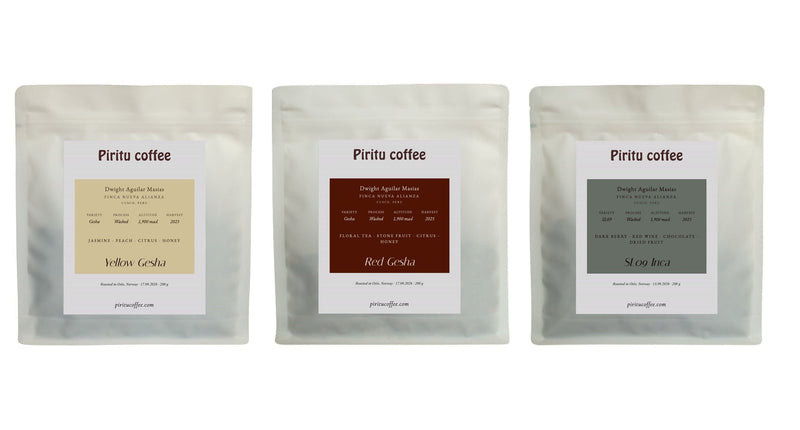
- SL09 Inca (200g). Dark berry, red wine, chocolate, dried fruit. Sourced from a single farm at 1,900m in Santa Teresa, Cusco.
If you also want to explore the more famous Peruvian varieties:
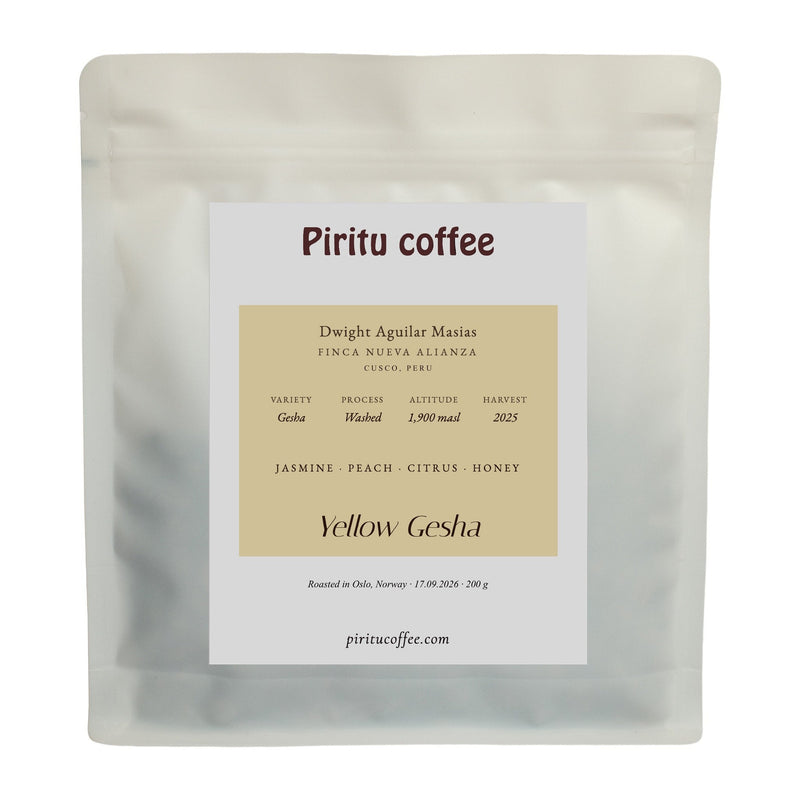
- Yellow Gesha (200g). 5th place, Cup of Excellence Peru 2025. Floral, jasmine, peach, citrus, honey.
- Red Gesha (200g). Tropical fruit, stone fruit, citrus, honey.
For brewing guidance or to ask about upcoming SL09 lots, reach us at hello@piritucoffee.com.
For more on rare coffee varieties and Peruvian specialty:
- What Is Gesha Coffee? The Complete Guide
- Panama Geisha vs Peru Gesha: Why the Spelling Tells You Everything
- About our sourcing in Cusco
Written by Giovanni Lindblom, co-founder of Piritu Coffee. We import small lots of SL09 and Gesha from Santa Teresa in Cusco and roast them in Oslo.