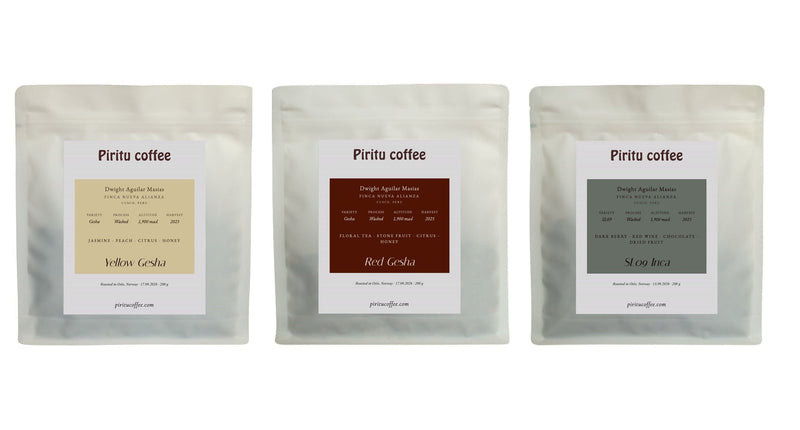
Gesha is expensive for four reasons that stack on top of each other: the plant gives less coffee than other varieties, it only shows its best at high altitude, everything from picking to drying is done by hand, and competition auctions have set a price ceiling that pulls the whole category upwards. None of these is a trick. Together they explain why a bag of our Yellow Gesha costs 419 NOK while a record auction lot can cost more than a car.
1. The Plant Gives Less
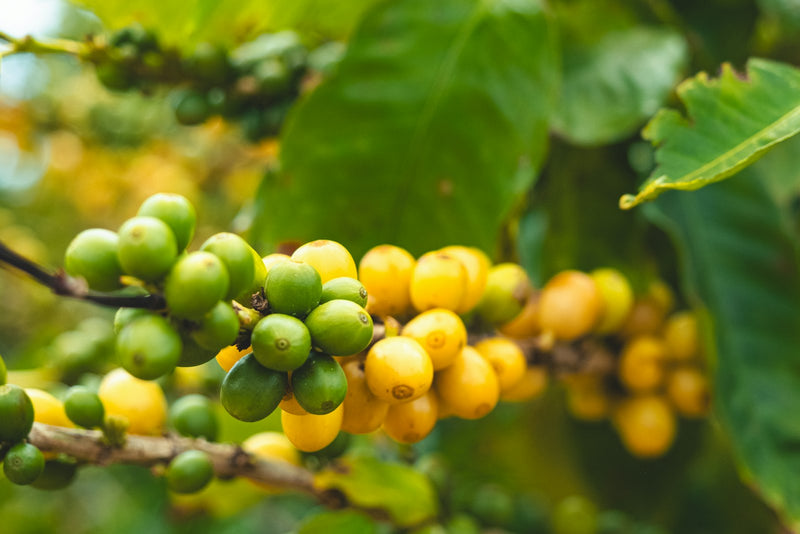
Gesha (often spelled Geisha) is a tall, open tree with long, brittle branches and a modest crop. Growers typically report yields well below common varieties like Caturra and Bourbon, with figures of 30 to 50 percent less cited by roasters who buy it (The Collector). A farmer who plants a hectare of Gesha gives up a hectare that could have produced more of something easier. The price has to cover that choice.
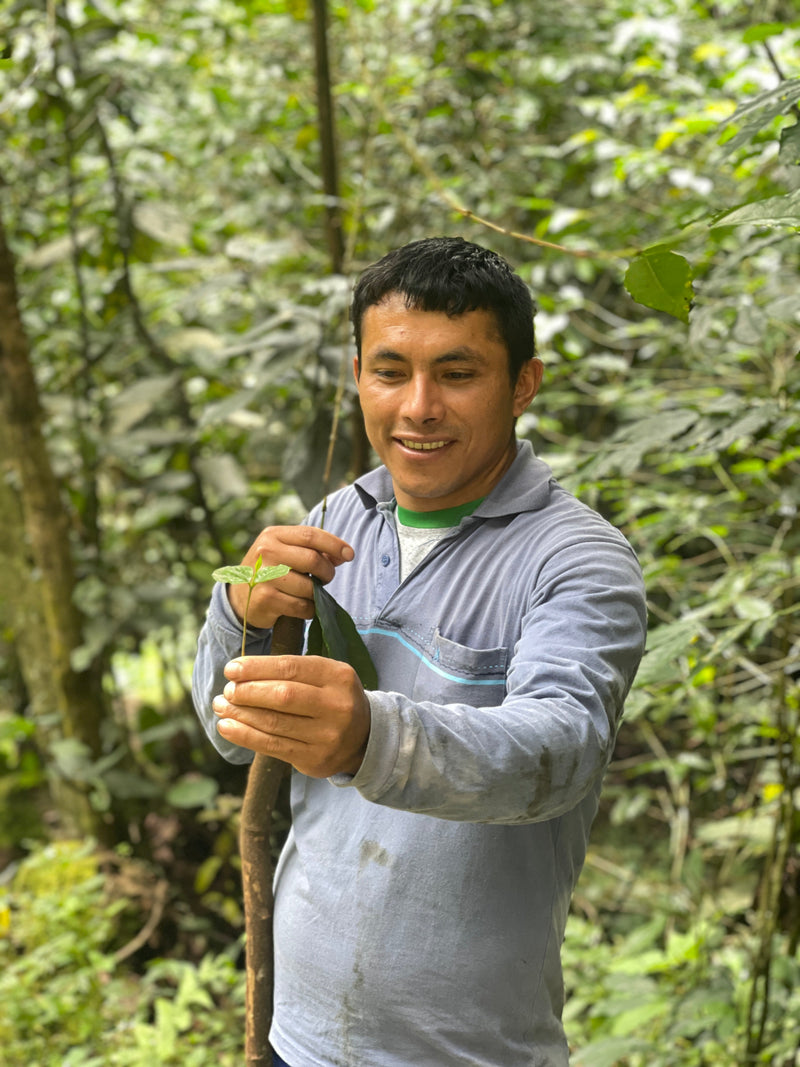
At Finca Nueva Alianza in Santa Teresa, Cusco, the yellow Gesha we buy grows on a single hectare planted in 2020. What Dwight Aguilar Masias does not keep for competition is shared between a handful of roasters. There is simply not much of it, and there never will be.
2. It Needs the Right Mountain
Gesha grown low or carelessly tastes like ordinary coffee. The jasmine, bergamot and stone fruit that made the variety famous appear when it is grown high, in cool nights, and managed well. Research on Panamanian Geisha found that lots grown above 1,700 metres cupped noticeably higher than lots from lower farms (CATIE). That limits where it can be grown at all. Our coffees come from 1,900 metres in the Cusco valleys, which is one reason the farm has placed in Cup of Excellence Peru.
3. Everything Is Done by Hand
Specialty coffee is picked by hand at full ripeness, often in several passes through the same trees. At Finca Nueva Alianza the cherries are rested for 24 hours and floated to remove anything underripe or damaged, then de-pulped, fermented and dried on raised beds under shade for around 20 days. A microlot of a few hundred kilos gets the same attention a vineyard gives a single parcel. That labour is the largest part of the farm-gate price, and it is also why the coffee tastes the way it does.
4. Auctions Set the Ceiling
The headlines come from auctions. At Best of Panama 2025, a washed Geisha from Hacienda La Esmeralda sold for US$30,204 per kilo of green coffee (Sprudge). At Cup of Excellence Peru 2025, the winning lot sold for US$80.10 per pound and the fifth-placed lot, Finca Nueva Alianza's yellow Geisha, for US$32.70 per pound (Alliance for Coffee Excellence). Commodity arabica traded at about US$2.87 per pound in September 2026 (Trading Economics).
Auction lots are tiny, and part of what buyers pay for is the prestige of owning the winner. But those numbers travel. Every roaster buying Gesha, and every farmer selling it, knows what the top of the market looks like, and that keeps ordinary Gesha priced well above ordinary coffee.
Why Panama Costs More Than Peru
Panama created the Gesha market when Hacienda La Esmeralda entered the variety in Best of Panama in 2004, and the country has been the reference point ever since. Its suitable growing area is small, its auction is the most watched in coffee, and the name Panama Geisha has become a brand of its own. Peru started later, with producers like Dwight winning Cup of Excellence in 2018 and 2021, and its Geshas are still priced on quality rather than on reputation. That gap is what you pay less for when you buy Peru Gesha. We compare the two in Panama Geisha vs Peru Gesha.
From Green Price to Your Bag
The green coffee price is only the start. Between the farm and your cup come export and import logistics, roasting (green coffee loses roughly 15 percent of its weight in the roaster), packaging, roasting to order in small batches, and 15 percent VAT on food in Norway. Those costs are similar for any specialty coffee, which is why the price difference between Gesha and a good washed Caturra is smaller on the shelf than it is at auction.
In practice a bag of our Yellow Gesha costs 419 NOK, Red Gesha 379 NOK and SL09 Inca 339 NOK for 200 g, which works out to roughly 23 to 28 NOK per cup at home. We break that down in What Does a Cup of Gesha Really Cost?
Is It Worth It?
If you drink filter coffee black and enjoy floral, fruity flavours, yes. If you take milk or prefer a dark, heavy cup, the qualities you are paying for get lost, and a less expensive coffee is the better buy. If you want to taste the difference before committing, Tres Amigos de Cusco gives you all three of our coffees, and our V60 recipe shows how to get the most out of them.
Frequently Asked Questions
Why is Gesha coffee so expensive?
The variety yields less than common varieties, it only shows its best at high altitude, the picking and processing are done by hand, and competition auctions have set very high reference prices for the category.
What is the most expensive Gesha ever sold?
At Best of Panama 2025, a washed Geisha from Hacienda La Esmeralda sold for US$30,204 per kilo of green coffee.
Why is Panama Geisha more expensive than Peru Gesha?
Panama created the market and its auction is the most watched in coffee, so the name carries a premium. Peru Gesha is priced on cup quality rather than reputation, which is why it costs a fraction as much.
How much does Gesha cost per cup at home?
Our Yellow Gesha costs 419 NOK for 200 g, which is roughly 28 NOK per cup. Our other coffees work out to about 23 to 25 NOK per cup.
Is Gesha worth the price?
Yes if you drink filter coffee black and enjoy floral, fruity cups. No if you drink coffee with milk, because the delicate flavours disappear.