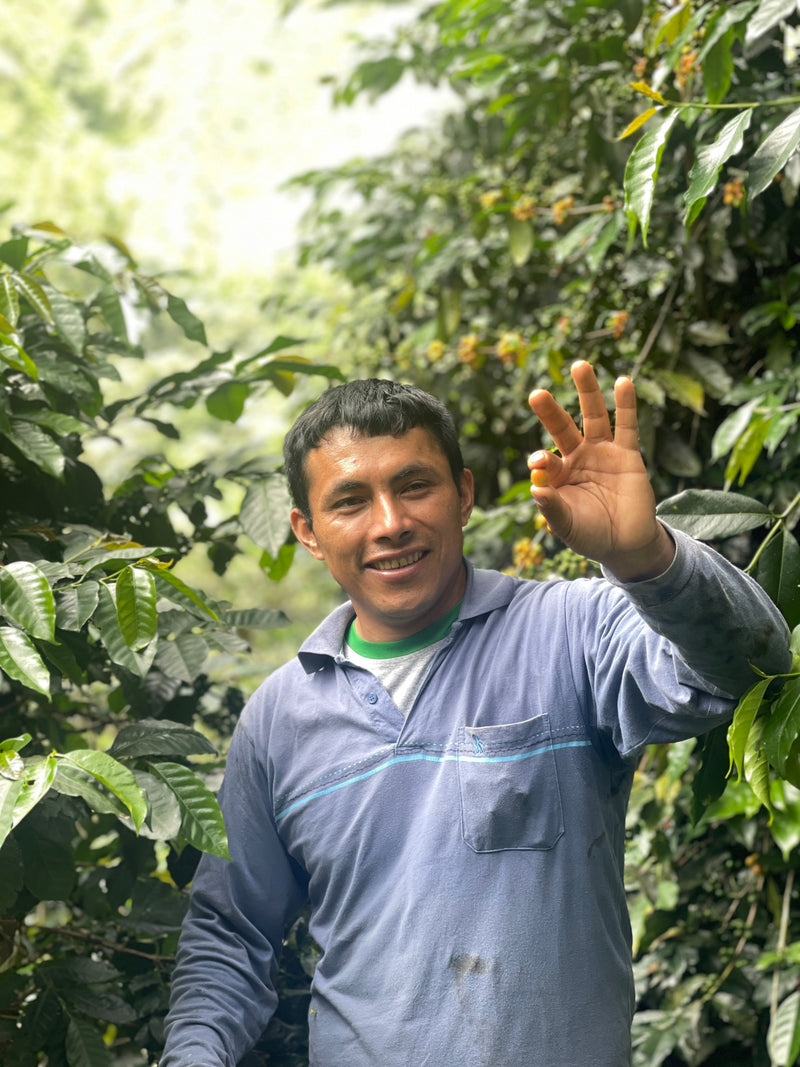
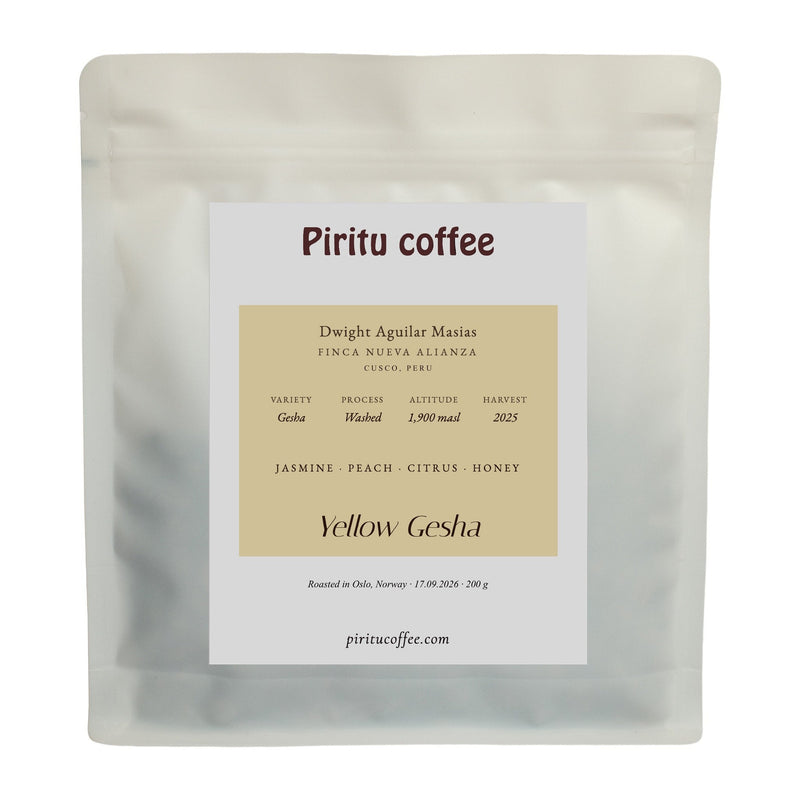
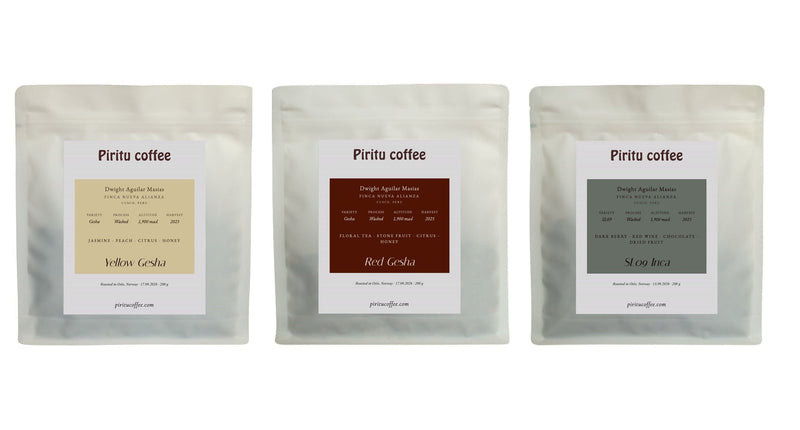
Two coffees from the same hillside in Santa Teresa, Cusco. Both washed. Both floral. Both scored by the same Cup of Excellence juries.
One is called Gesha. The other was called Inca Gesha for the better part of a decade, until a DNA test in December 2024 showed that it is not a Gesha at all. It is SL09, a Kenyan selection from the 1930s that almost nobody has planted since.
That result could have been an embarrassment. Instead it is the most interesting thing to happen to Peruvian coffee in years, and it changes how you should read the label on both of our bags.
Both Trace Back to Ethiopia, but Not to the Same Trees
Gesha is the well-told story. Wild plants were collected near the village of Gesha in south-western Ethiopia in the 1930s, an accession reached the CATIE research station in Costa Rica in 1953, and seedlings arrived in Panama in the 1960s, where the variety sat unnoticed until Hacienda La Esmeralda entered it in the Best of Panama competition in 2004. We wrote about that arc, and about the two spellings, in Panama Geisha vs Peru Gesha.
SL09 took a different road out of Ethiopia. At Scott Agricultural Laboratories in Kenya, breeders selected single trees from mixed plantings between 1935 and 1939 and gave each a number. SL28 and SL34 became the backbone of Kenyan coffee. SL09 did not. It was susceptible to coffee berry disease and leaf rust, it yielded little, and it was never released commercially outside Kenya. For seventy years it existed mainly as a catalogue entry.
When the geneticist Christophe Montagnon at RD2 Vision fingerprinted Peru's "Inca Gesha" with eleven SSR markers, in a report dated 6 December 2024 and commissioned by SEY Coffee in Brooklyn, the samples landed in a group he calls Ethiopian Legacy, "very close to SL-09" and "not even close to Geisha". Gesha sits in a separate group, Core Ethiopia. Same continent of origin, different trees, different branches of the family. Christopher Feran's essay The Lost Origins of Inca Gesha (January 2026) lays out the evidence in detail, and Daily Coffee News called it the closest thing to a definitive history that exists.
The Naming Question: Why Farmers Called It Inca Gesha
Nobody was trying to deceive anyone. Farmers in the Inkawasi valley of La Convención had a tall, low-yielding tree with elongated cherries that cupped like the most expensive coffee in the world: jasmine, bergamot, citrus, a tea-like body. Gesha was the only word the market had for that profile, so Gesha is what they called it, with Inca in front to mark where it grew.
It is the same lesson as the Panama story, seen from the other side. A name on a coffee bag tells you where the coffee has been and what people expected of it. It does not tell you what the plant is, and it does not tell you what the cup is worth. Cup of Excellence juries score blind, and as you will see below, they did not care what the variety was called.
We named our lot SL09 Inca for exactly that reason. The number says what it is. The word says where it came from.
How SL09 Reached Cusco
Nobody knows for certain. Feran outlines three routes: seedlings distributed from the Tingo María research station in the 1960s, whose records were destroyed in 1988; colonial-era germplasm that travelled through British networks; or a single mother tree in Inkawasi planted after the mid-1990s and multiplied from seed by neighbours. The last theory fits what you see on the ground today, where the variety grows at 2,000 to 2,400 metres in Inkawasi and is spreading, unverified, from farm to farm across the province.
What is documented is its competition record. SL-09 lots appeared four times in Cup of Excellence Peru 2020, not at all from 2021 to 2023, once in 2024, and three times in 2025, according to the lot-by-lot count in Vela Ethan's SL-09 dossier (August 2026). Khipu Coffee's 2025/26 Peru Harvest Guide names SL09 as one of five themes defining the country's specialty sector. The variety Kenya shelved is now one of the reasons buyers fly to Cusco.
Side by Side
| Gesha | SL09 | |
|---|---|---|
| Genetic group (RD2 Vision, 2024) | Core Ethiopia | Ethiopian Legacy, close to SL-09 |
| Where the selection comes from | Gesha forest, Ethiopia, via CATIE, Costa Rica (1953) | Scott Agricultural Laboratories, Kenya (1935 to 1939) |
| What Peru calls it | Gesha or Geisha | Inca Gesha, SL9, SL-09 |
| Best result, Cup of Excellence Peru 2025 | 1st place, 90.64, washed, Cajamarca | 3rd place, 89.97, washed, Cusco |
| Lots in the 2025 top 30 | About 26 | 3 |
| Auction price of that best lot | US$80.10 per lb | US$46.10 per lb |
| Our lots: process | Washed, 36 h dry fermentation (Red), dried on raised beds | Washed, 60 h in enclosed steel tanks, dried on raised beds |
| Our lots: in the cup | Jasmine, lychee, honeydew, stone fruit, honey | Dark berry, red wine, chocolate, dried fruit |
| Our price per 200 g | 379 NOK (Red), 419 NOK (Yellow) | 339 NOK |
| Availability | Rare, growing fast | Rarer, spreading from a handful of farms |
Competition figures are from the Cup of Excellence Peru 2025 results. The Gesha rows describe the variety as it grows on Finca Nueva Alianza; both Gesha colours and the SL09 in our range come from the same producer, Dwight Aguilar Masias, at about 1,900 metres in Santa Teresa.
Why the Price Gap Is Smaller Than the Name Gap
A Gesha from Panama sold for US$30,204 per kilo at the Best of Panama auction in August 2025. A Gesha from Cusco costs a fraction of that, and an SL09 from the same valley costs less again. Three things explain the gap, and none of them is the bean.
One: there is no brand. Gesha has Hacienda La Esmeralda, twenty years of auction headlines and a name people recognise. SL09 has a catalogue number and a nickname it has just lost. Nobody pays a premium for a story that is still being written.
Two: the supply constraint is the same, the demand is not. Both varieties are fragile. Both yield poorly. Both punish careless farming. That limits the amount of Gesha in the world and pushes its price up, because thousands of buyers want it. It limits the amount of SL09 just as hard, but the buyers who know to ask for it still fit in a small room.
Three: the jury does not read the label. In Cup of Excellence Peru 2025, the third-placed coffee was a washed SL-09 from Llaqta Pata in Cusco. It scored 89.97, within seven tenths of a point of the winning Gesha, and it sold for US$46.10 per pound. The fifth-placed coffee, a washed Geisha Amarilla from Nueva Alianza, scored 89.86 and sold for US$32.70. The SL09 outsold the Gesha, because the bidders had tasted both blind.
These are market dynamics. They describe what people have heard of, not what is in the cup.
What This Means for the Drinker
Buy the Gesha when:
- You want the classic profile: jasmine, tea-like body, bright citrus, a finish that reads as honey.
- You brew filter, especially V60 or Kalita, and you want to see what the Panama fuss is about at a Cusco price.
- You are comparing origins. Peru Gesha next to a Panama Geisha is the most instructive cupping you can do at home.
Buy the SL09 when:
- You want more weight in the cup. Our lot leans to dark berry, red wine and chocolate rather than flowers.
- You are curious about what exists beyond Gesha, and you want to taste a variety before it gets a reputation.
- You want the most affordable way into a coffee from a Cup of Excellence winning farm. At 339 NOK per 200 g it is the least expensive bag we roast.
At Piritu Coffee, we roast both from Finca Nueva Alianza, the farm that won Cup of Excellence Peru in 2018 and 2021 and placed fifth in 2025 with its Geisha Amarilla. To be precise about what that means: the lots the juries scored were the farm's competition lots, sold at auction. The coffee in our bags is the same farm, the same producer and the same harvest, roasted in Oslo and shipped within 24 hours of roasting. It is not the auction lot, and we would rather you knew the difference.
A Note on Processing, and Why Our SL09 Tastes Different
If you have read descriptions of Inkawasi SL9 from other roasters, you will have seen jasmine, lychee, bergamot and passion fruit. Ours is described as dark berry, red wine and chocolate. Both are honest. Two things explain the difference, and we want to name them rather than paper over them.
The first is fermentation. Our Red Gesha is dry-fermented for 36 hours and dried on raised beds. Our SL09 spends 60 hours in enclosed steel tanks before drying. Longer, oxygen-poor fermentation pushes a washed coffee towards fruit and wine and away from delicate florals, whichever variety it is. The protocol on the farm also changes from lot to lot and from year to year, so the numbers above describe our 2025 harvest lots, not a fixed recipe.
The second is that plant material in Peru is still being verified. The RD2 Vision test covered Inkawasi samples. Whether every tree sold as SL09 or Inca Gesha in Cusco, including the ones on the plots we buy from, is genetically identical to those samples has not been established, and SEY notes that the yellow Gesha lots from this farm have not yet been genetically confirmed to be Gesha either. DNA testing is the only thing that settles such questions. Until it does, we describe what is in our cup and name the variety the way the producer names it.
The Long View
Cup of Excellence Peru 2026 introduces three categories for the first time, with washed and honey coffees judged separately from naturals and experimental lots. The jury sits from 3 to 6 November and the auction is on 8 December. It will be the first year we can see how SL09 performs against Gesha without processing differences muddying the comparison.
Elsewhere, Gesha's dominance is being questioned. At the Global Coffee Awards 2025 only six of the top twenty-five coffees were Gesha. World Brewers Cup finalists still reach for it almost without exception. Both things are true at once: Gesha is the standard, and the search for what comes after it has started. SL09 seed is spreading across La Convención faster than anyone can verify it, and the window in which you can drink a top-three Cup of Excellence variety for 339 NOK is the same kind of window Peru Gesha was in a few years ago. Those windows close.
Frequently Asked Questions
Is SL09 a Gesha?
No. A DNA fingerprint by RD2 Vision (December 2024) placed Peru's "Inca Gesha" in the Ethiopian Legacy group, very close to SL-09 and not close to Geisha. The two varieties share an Ethiopian ancestry but are different plants.
Are Inca Gesha, SL9, SL-09 and SL09 the same thing?
Yes. Inca Gesha is the name Peruvian farmers gave the variety because it cupped like Gesha. SL9, SL-09 and SL09 are the Scott Laboratories selection number written three ways.
Is SL09 related to SL28 and SL34?
Only by address. All three were selected at Scott Agricultural Laboratories in Kenya, but from different source material. SL28 and SL34 became Kenya's main varieties; SL09 was never released commercially.
Does SL09 taste like Gesha?
Often, which is how it got the name. Inkawasi lots are described as jasmine, lychee and bergamot. Our lot, fermented for 60 hours in enclosed tanks, leans to dark berry, red wine and chocolate. Process shapes the cup as much as variety does.
Why is SL09 cheaper than Gesha?
Not because it scores lower. In Cup of Excellence Peru 2025 the best SL-09 scored 89.97 and sold for more per pound than a Geisha that scored 89.86. It is cheaper because almost nobody knows to ask for it yet.
Which should I try first, SL09 or Gesha?
If you want to understand why the world pays for Gesha, start with the Red Gesha. If you want to taste where Peru is going, start with the SL09. If you can, brew them side by side at the same ratio, 14 g to 250 g, 91 °C for the Gesha and 92 °C for the SL09.
Try Both for Yourself
All three coffees come from Dwight Aguilar Masias at Finca Nueva Alianza, Santa Teresa, Cusco, roasted to order in Oslo and shipped within 24 hours of roasting.
- SL09 Inca (200 g). Washed, 60 hours in enclosed steel tanks. Dark berry, red wine, chocolate, dried fruit.
- Red Gesha (200 g). Washed, 36 hours dry fermentation. Jasmine, lychee, honeydew, stone fruit, honey.
- Yellow Gesha (200 g). Washed, dried around 20 days on raised beds. Jasmine, lilac, tropical fruit, ripe peach, honeyed finish.
Read more about SL09 and its Scott Labs history, what Gesha coffee is, and the producer behind all three. For brewing advice, write to hello@piritucoffee.com.