Peru grows coffee in 16 of its 25 regions, on the eastern slopes of the Andes where the mountains drop toward the Amazon. Almost all of it is arabica, almost all of it is washed, and more than nine in ten bags come from farms smaller than five hectares. That makes "Peruvian coffee" a wide label. A cup from Cajamarca in the north and a cup from Cusco in the south are grown a thousand kilometres apart, picked in different months, and taste different. This guide goes region by region: where the coffee grows, how high, when it is picked, what is planted, what it tastes like, and which regions keep winning Cup of Excellence.
Peruvian coffee at a glance
| Production 2025/26 | About 4.76 million 60 kg bags (USDA, May 2026) |
|---|---|
| World ranking | 9th largest producer and exporter; largest exporter of organic coffee (Midagri, 2025) |
| Farms | More than 220,000 families; over 90 percent of coffee from farms under 5 hectares |
| Area | About 427,000 hectares planted, of which more than 85,000 certified organic |
| Regions | Cajamarca 22 %, San Martín 20 %, Junín 19 %, Amazonas 15 % of production; Cusco, Huánuco and Pasco next (USDA 2025, Midagri 2025) |
| Altitude | Most coffee between 1,000 and 1,800 metres; specialty lots commonly 1,600 to 2,400 metres |
| Varieties | Typica about 70 %, Caturra about 20 %, then Catimor, Bourbon and Pache; Geisha and SL09 in specialty lots |
| Harvest | Roughly April to September, north first, south last; marketing year runs April to March |
| Exports | United States 27 %, Germany 19 %, Belgium 11 % of volume (2024/25); 52 markets; over US$1.1 billion in 2024 |
| Protected origins | Café Villa Rica (Pasco, 2010) and Café Machu Picchu-Huadquiña (Santa Teresa, Cusco, 2011) |
A short history, and why it matters for the cup
Coffee reached Peru in the eighteenth century with Jesuit missionaries and was grown for the house, not for export, until the late 1800s. Commercial planting followed the Grace Contract of 1886, when British interests took land in the central jungle around Chanchamayo. For most of the twentieth century Chanchamayo was Peruvian coffee; Sucafina estimates it once produced around 70 percent of the crop.
Two later events shaped the map you see today. From the 1970s, state-backed cooperatives handled about 80 percent of exports, and when the International Coffee Agreement's quota system collapsed in 1989 many of them failed, pushing farmers toward private buyers and, in some valleys, toward coca. Then, from 2012, coffee leaf rust swept through the country and damaged about 40 percent of the crop. Rust hit organic farms hardest, because they had fewer treatments available, and it hit the central region hardest of all. Chanchamayo never fully recovered its share. The north, with newer plantings and more cooperative investment in mills and drying, took over as the volume centre.
The specialty story is more recent still. Cup of Excellence held its first Peruvian competition in 2017. Since then the auctions have pulled buyers to farms that had never sold a traceable lot, and two regions have dominated the results: Cajamarca and Cusco.
The three belts
It helps to think of Peruvian coffee as three belts running north to south along the eastern Andes.
- North: Cajamarca, Amazonas, San Martín and a little in Piura. The volume centre and the Cup of Excellence centre. Earliest harvest.
- Centre: Junín (Chanchamayo and Satipo), Pasco (Villa Rica and Oxapampa), Huánuco, and the VRAEM valleys of Ayacucho and Huancavelica. The historic heart, still large by volume.
- South: Cusco (La Convención) and Puno (Sandia). Smaller volumes, high altitudes, late harvest, and the strongest recent showing in competition after Cajamarca.
Region by region
Altitudes and harvest months are approximate ranges drawn from buyers' harvest guides and importer profiles; individual farms sit above and below them. Production shares are USDA's 2025 figures and cover the four largest regions only.
| Region | Share | Altitude | Harvest | Main varieties | Typical cup | Known for |
|---|---|---|---|---|---|---|
| Cajamarca | 22 % | 900 to 2,250 m | April to September | Typica, Caturra, Bourbon, Pache, Geisha | Sweet, bright acidity, red and yellow fruit | Jaén and San Ignacio; seven of ten Cup of Excellence wins |
| San Martín | 20 % | 800 to 1,500 m | May to August | Caturra, Catimor, Bourbon, Costa Rica 95 | Chocolate, nuts, caramel, medium body | Volume, cooperatives, grown alongside cacao |
| Junín | 19 % | 900 to 2,000 m | May to September | Caturra, Catimor, Typica, Bourbon | Black and yellow fruit, chocolate, creamy body | Chanchamayo and Satipo; the historic centre |
| Amazonas | 15 % | 900 to 2,400 m | April to August | Typica, Caturra, Catimor, Bourbon | Dried fruit, caramel, balanced | Rodríguez de Mendoza, Lonya Grande, Utcubamba |
| Cusco | Top seven | 1,600 to 2,400 m | June to September | Typica, Bourbon, Caturra, Geisha, SL09 | Florals in Gesha and SL09; red and black fruit, plum, chocolate in Typica and Bourbon | La Convención: Quillabamba, Santa Teresa, Inkawasi; three Cup of Excellence wins |
| Puno | Small | 1,600 to 2,100 m | June to October | Caturra, Typica, Bourbon | Tropical fruit, floral, juicy, bright | Sandia valley on the Bolivian border; specialty rather than volume |
| Pasco | Top seven | 1,200 to 1,600 m | May to September | Bourbon, Catimor, Catuaí, Geisha | Nut and chocolate, citrus, floral, intense acidity | Villa Rica, Peru's first protected coffee origin (2010); Oxapampa |
| Huánuco | Top seven | 1,500 to 2,000 m | May to September | Typica, Caturra, Catimor, Pache | Orange, mandarin, caramel, smooth | Grown with cacao; little traceable supply so far, but second place in Cup of Excellence 2026 |
| Ayacucho and VRAEM | Small | 1,600 to 2,400 m | June to September | Caturra, Typica | Black fruit, chocolate, caramel | Newer to quality coffee; high valleys |
| Piura | Small | 900 to 2,000 m | April to August | Typica, Caturra, Catimor | Chocolate, caramel, nuts, good body | Huancabamba; low yields |
Cajamarca: the competition region
Cajamarca sits in the far north, and its two coffee provinces, Jaén and San Ignacio, border Ecuador. Coffee grows from about 900 metres on the valley floors to above 2,000 metres in districts like San José del Alto and Huabal, and the newer Cutervo zone reaches 2,100 metres on land that used to grow sugar cane. Typica and Caturra are the backbone; Bourbon, Pache and increasingly Geisha fill the specialty lots.
What sets Cajamarca apart is not one farm but density: hundreds of smallholders within an hour of each other, exporters and cooperatives with wet mills and drying sheds nearby, and a decade of competition experience. Of the ten Cup of Excellence Peru competitions held so far, seven have been won by Cajamarca farms, with scores between 90.39 and 92.28. The 2026 winner, Fidel Huancas Huancas's washed Geisha from Finca La Esperanza, scored 91.71, and Cajamarca took 15 of the 30 winning places that year. The 2025 winner, Ángel Antonio Manosalva Palomino's washed Geisha from La Catarata in Jaén, scored 90.64 and sold for US$80.10 per pound. In the cup, Cajamarca at its best is sweet and bright: red and yellow fruit, clean acidity, a lighter body than the central regions.
Cusco: La Convención and Santa Teresa
Cusco is where we buy, so we know it best. The coffee grows in La Convención province, in the warm valleys that drop from Machu Picchu toward the Amazon: Quillabamba, the old trading town; Santa Teresa, on the Urubamba and Sacsara rivers below the ruins; and the Inkawasi valley further in, where farms sit between 2,000 and 2,400 metres. It is the highest coffee in Peru alongside Puno, and the latest to be picked. Harvest runs from about June into September.
Two things make Cusco different from the north. The first is variety. Alongside Typica, Bourbon and Caturra, La Convención has become the home of Peru's two most talked-about specialty varieties: Gesha, and the local tree farmers long called Inca Gesha, which a DNA test in December 2024 placed very close to the Kenyan selection SL09. In Cup of Excellence Peru 2025, Cusco took five of the top eight places with Gesha and SL09 lots, including third and fourth with SL-09. In 2026 it placed 11 lots among the 30 winners, nine of them SL-09, with the best SL-09 fifth on 90.22. We have written about that variety in detail in our SL09 guide and in SL09 vs Gesha.
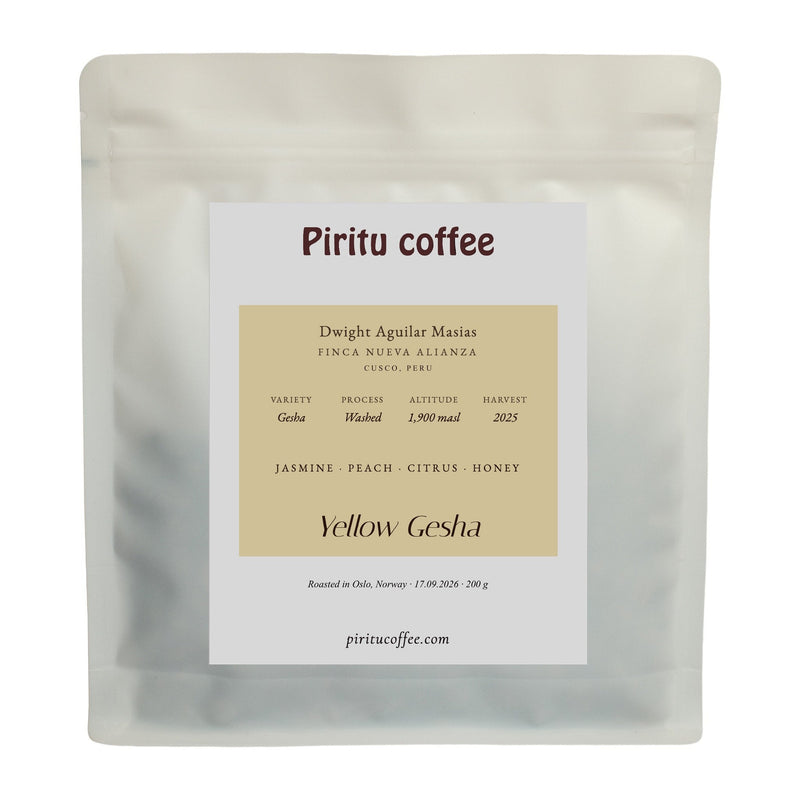
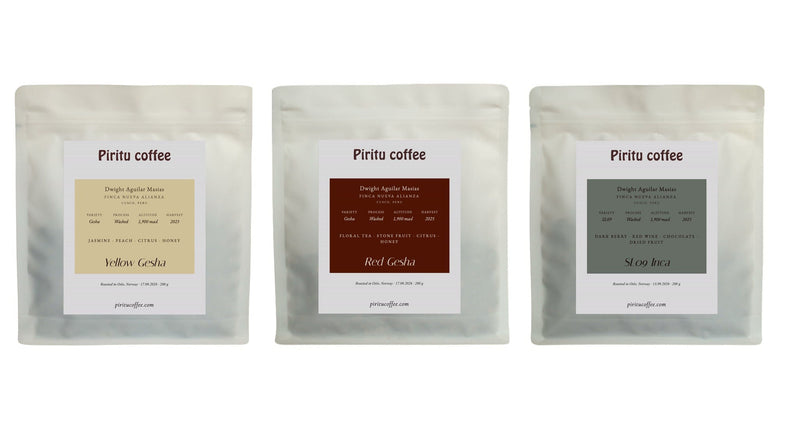
The second is recognition. Café Machu Picchu-Huadquiña, from the Huadquiña area of Santa Teresa district, has been a protected designation of origin since 2011, one of only two coffee origins in Peru with that status. Santa Teresa is also where Finca Nueva Alianza sits, at about 1,900 metres. Its farmer, Dwight Aguilar Masias, won Cup of Excellence Peru in 2018 and 2021, two of the three years the competition has left Cajamarca, and placed fifth in 2025 with a Geisha Amarilla. All three of our coffees come from that farm.
In the cup, Cusco Gesha is jasmine, bergamot, stone fruit and a tea-like body. Cusco SL09 is floral in short-fermentation lots and dark berry, red wine and chocolate in long-fermentation lots like ours. The traditional varieties lean to red and black fruit, plum and chocolate with a creamy body.
Junín and Pasco: the central jungle
Chanchamayo, in Junín, is the name most people outside Peru associated with Peruvian coffee for a century, and with Satipo it still supplies about a fifth of the national crop. Altitudes run from 900 to 2,000 metres; Caturra, Catimor and Typica dominate, with Bourbon, Geisha and Pacamara on a few specialty farms. The cup is fuller than the north: black and yellow fruit, chocolate, caramel, a creamy body with lively acidity. Rust hit here harder than anywhere, and much of the replanting was with Catimor for resistance, which is one reason the region has fewer competition results than its size would suggest.
Next door in Pasco, Villa Rica and Oxapampa are high-jungle towns settled by Austrian and German colonists in the nineteenth century. Villa Rica was the first Peruvian coffee to receive a protected designation of origin, in August 2010. Volumes are small and altitudes modest, 1,200 to 1,600 metres, but the profile is distinctive: nut and chocolate on the nose, raisin, citrus and florals in the cup, intense acidity.
San Martín and Amazonas: the volume north
San Martín and Amazonas together account for more than a third of Peru's coffee. San Martín is the lower of the two, 800 to 1,500 metres around Moyobamba and Lamas, with a tropical climate shared with cacao, which many of the same farmers grow. The cup is chocolate, nuts and caramel with medium body: reliable, rarely spectacular, and the base of a great deal of certified organic and Fairtrade export. Amazonas climbs higher, to 2,400 metres in places, and its best lots from Rodríguez de Mendoza and Lonya Grande show dried fruit and caramel with more acidity. Both regions have seen heavy investment in cooperative mills, raised beds and drying sheds in the past decade, which is where most of Peru's quality gains at volume have come from.
Puno: the far south
Puno is better known for Lake Titicaca than for coffee, but the Sandia valley on the Bolivian border grows some of the country's most distinctive lots at 1,600 to 2,100 metres. Harvest is the latest in Peru, June to October. Caturra, Typica and Bourbon give a cup of tropical fruit, passion fruit and pineapple, florals and a juicy, bright acidity. Volumes are tiny, yields low, and almost everything goes to the specialty market. Puno farms placed fourth in Cup of Excellence 2018 and fifth in 2020.
Cup of Excellence Peru winners, 2017 to 2026
| Year | Farm | Producer | Region | Variety | Score |
|---|---|---|---|---|---|
| 2017 | La Flor | Juan Heredia Sánchez | Cajamarca | Not stated | 92.25 |
| 2018 | Nueva Alianza | Dwight Aguilar Masias | Cusco | Geisha, washed | 91.08 |
| 2019 | La Lúcuma | Grimanes Morales Lizana | Cajamarca | Costa Rica 95, washed | 92.28 |
| 2020 | Esperanza | Hilda Leguía Gonzales | Cusco | Gesha / SL-09, washed | 90.00 |
| 2021 | Nueva Alianza | Dwight Aguilar Masías | Cusco | Gesha, washed | 90.20 |
| 2022 | La Bola | Blanca Flor Córdova Jiménez | Cajamarca | Geisha, washed | 90.39 |
| 2023 | Alto Mirador | Yoniser Mego Silva | Cajamarca | Geisha | 90.74 |
| 2024 | El Mirador | Miguel Padilla Chinguel | Cajamarca | Caturra, Bourbon, Geisha | 90.54 |
| 2025 | La Catarata | Ángel Antonio Manosalva Palomino | Cajamarca | Geisha, washed | 90.64 |
| 2026 | Finca La Esperanza | Fidel Huancas Huancas | Cajamarca | Geisha, washed | 91.71 |
Three things stand out. Cajamarca has won seven of ten. Cusco has won the other three, twice at Nueva Alianza and once at Hilda Leguía Gonzales's Esperanza, and in 2025 it filled more of the top ten than Cajamarca did, before Cajamarca took six of the top ten in 2026. And the winning variety has shifted from Typica, Caturra and Bourbon in the early years to Geisha, with SL09 now close behind. The 2026 results, the new categories and the auction dates are covered in Cup of Excellence Peru 2026.
What makes Peruvian coffee taste the way it does
- Altitude. Most Peruvian coffee grows between 1,000 and 1,800 metres, and the specialty lots sit higher, often above 1,800. Slow ripening at altitude is where the acidity and sweetness come from.
- Washed by default. The traditional method is to pulp the cherry, ferment it in tanks, wash it and sun-dry it, historically on tarpaulins or roofs, increasingly on raised beds and in drying sheds. Naturals and honeys exist but are a small, recent share. If a Peruvian coffee tastes clean and bright rather than funky, that is why.
- Smallholders. The average farm is about three hectares, hand-picked and shade-grown. Quality varies plot by plot, which is why a named farm and a named altitude on the bag mean more here than in origins with large estates.
- Organic by circumstance as much as by choice. Many farms never used synthetic inputs, so certification was a small step. Peru is the largest exporter of organic coffee in the world, with more than 85,000 certified hectares.
- Variety. Typica, still around 70 percent of plantings, gives a soft, sweet, balanced cup. Caturra adds brightness. The Catimor planted after rust is more resistant and usually less interesting. Gesha and SL09 are the reason Peru now appears in the same sentence as Panama and Colombia.
How to read a bag of Peruvian coffee
- Region, then province. "Peru" tells you little. "Cajamarca, Jaén" or "Cusco, La Convención" tells you the belt, the altitude band and the harvest window.
- Altitude. Below 1,400 metres expect chocolate and nuts; above 1,800 expect fruit, florals and acidity.
- Variety. Typica and Bourbon for sweetness and balance, Caturra for brightness, Gesha and SL09 for florals and complexity, Catimor as a warning sign for a specialty price.
- Timing. Northern coffee is picked from April and lands in Europe from late summer; southern coffee is picked into September and lands from autumn through winter. A Cusco coffee roasted in November is fresh crop.
- Farm or cooperative. Both can be excellent. A single farm lets you taste one producer's decisions; a cooperative lot is a blend of many small plots, usually more consistent and less distinctive.
Frequently asked questions
Where is coffee grown in Peru?
On the eastern slopes of the Andes in 16 of Peru's 25 regions. The four largest producers are Cajamarca, San Martín, Junín and Amazonas, which together account for about three quarters of the crop. Cusco, Pasco, Huánuco, Puno and Ayacucho are smaller but important for specialty coffee.
Which Peruvian region produces the best coffee?
By competition results, Cajamarca: its farms have won seven of the ten Cup of Excellence Peru competitions since 2017, including 2026. Cusco has won the other three and took five of the top eight places in 2025. Puno, Amazonas and Villa Rica in Pasco also produce award-winning lots.
When is the coffee harvest in Peru?
Roughly April to September, moving from north to south. Cajamarca and Amazonas start in April, San Martín and the central regions in May, Cusco in June, and Puno picks into October. The marketing year runs from April to March.
What does Peruvian coffee taste like?
Most of it is washed, so the cup is clean and sweet. Lower-altitude lots from San Martín and Junín lean to chocolate, nuts and caramel. Higher lots from Cajamarca, Cusco, Amazonas and Puno show red and tropical fruit, florals and bright acidity. Gesha and SL09 from Cusco add jasmine, bergamot and, in long-fermentation lots, dark berry and red wine.
Is Peruvian coffee organic?
A large share is. Peru is the world's largest exporter of organic coffee, with more than 85,000 certified hectares, and most farms are small, shade-grown and hand-picked. Certification is common but not universal, so check the bag.
What coffee varieties are grown in Peru?
Typica makes up about 70 percent of plantings and Caturra about 20 percent, followed by Catimor, Bourbon and Pache. Specialty farms increasingly grow Geisha, and Cusco is the home of SL09, the variety long called Inca Gesha.
How much coffee does Peru produce?
About 4.76 million 60 kilogram bags in 2025/26 according to the USDA, from roughly 427,000 hectares farmed by more than 220,000 families. Peru ranks ninth among producing countries. Exports go to 52 markets, led by the United States, Germany and Belgium.
Which Peruvian coffees have a protected designation of origin?
Two: Café Villa Rica from the Villa Rica district of Oxapampa, Pasco, recognised in 2010, and Café Machu Picchu-Huadquiña from the Huadquiña area of Santa Teresa district, La Convención, Cusco, recognised in 2011.
Sources
- USDA Foreign Agricultural Service, Peru: Coffee Annual, May 2026 and May 2025 editions; regional shares, varieties, farm size, rust and export figures as summarised by Daily Coffee News.
- Ministerio de Desarrollo Agrario y Riego, via Andina, 18 July 2025: families, hectares, organic area, export value, rankings.
- Alliance for Coffee Excellence, Cup of Excellence Perú results pages 2019, 2020, 2021, 2022, 2023, 2024, 2025 and 2026; 2017 and 2018 from Cup of Excellence and Global Coffee Report.
- Perfect Daily Grind, A Guide to Peru's Coffee-Producing Regional Profiles, with Caravela Coffee: altitudes, varieties and cup profiles by region.
- Khipu Coffee, Peruvian Coffee Harvest Guide 2023/24: altitude bands and varieties by region.
- Sucafina, Peru origin profile: history, Chanchamayo's former share, processing norms.
- Indecopi, via Andina: designations of origin Café Villa Rica (2010) and Café Machu Picchu-Huadquiña (2011).
- Christopher Feran, The Lost Origins of Inca Gesha: early history of coffee in Peru and the Tingo María station.
Taste Cusco
All three of our coffees come from Finca Nueva Alianza in Santa Teresa, La Convención, at about 1,900 metres: the Yellow Gesha and Red Gesha for the floral side of the region, and the SL09 Inca for the dark berry and red wine side. Shipped within 24 hours of roasting. If you want the whole picture of the variety that put Cusco on the map, start with What Is Gesha Coffee? The Complete Guide.
Written by Giovanni Lindblom, co-founder of Piritu Coffee. We buy direct from Santa Teresa in Cusco and roast in Oslo.